You have found our story book in the ‘peculiar non-fiction’ section.
– Happy browsing!
Articles, STORIES, columns and more.
This is where thoughts gather, case studies unfold, and experiments live on. From behind-the-scenes reflections to longform articles and short sparks of inspiration, we use this space to think out loud and deepen the conversation around storytelling, systems change, and the regenerative transition.
Our trail brought us to the wondrous world of regeneration. Collaborating with partners building regenerative systems – from seaweed farmers to game designers – we realised it was time.
Time to get our hands dirty and dig a deep rabbit hole in healthy soils.
How can we use our storytelling skills and experience to contribute to this shift from extractive to regenerative systems?
To share the insights we gather, stories we hear and examples that blow our mind, we are publishing a series about the Regenerative Narrative.
In this space, you can find the conversations, case studies, and unanswered questions we’ve encountered along the way.
Ready to dig?

From soil to spreadsheets
What role can communication play in unsticking the system? To find out, we had a conversation with two organisations operating at the forefront of this shift: MAD Agriculture (USA) and EARA (The European Alliance for Regenerative Agriculture).

Why brand a bioregion
Bringing a living system into our linear, boxed-in world of KPIs, policy papers, and Instagram algorithms is a paradox and perhaps impossible. But can we see branding as a tool to give nature a voice? And how could it benefit bioregions if we do so?
FILM PROJECT: MUSTARDSEED TRUST
We were invited to capture the very last Mustardseed Trust Jamboree in Nice on film. This short video brings together the voices, ideas, and wildness that filled those three days.
The Circle of Soil, the second Newspaper issue for Mustardseed Trust.
Our team wrote every article and interviewed every partner involved, exploring how regenerative ecosystems, money systems, and human relationships intertwine within the Care Economy. Originally a printed publication shared with the Trust’s network, we have now adapted these stories into a blog series for those who want to dive deep into the power of soil and systemic change.

The Universe Below our Feet
As children, we used to love playing in it. We would carry it on our knees and under our fingernails. When we would enter the house for dinner, our parents would make us wash it off our hands before eating. The dirt made us dirty, and only clean kids were allowed at the dinner table. Little did our parents know the true value of the dirt under our fingernails.

A day in our regenerative future
You slowly wake up to the soft morning sunlight peeking through your curtains. As your house is situated on the edge of the forest, you wake up daily to an orchestra of birds and crickets. Barefoot you make your way to the kitchen, only to notice you are out of fresh fruits for breakfast.

Farming with nature
One thing is for sure: in the long run, farming with nature is easier and cheaper than farming against nature – especially with the skyrocketing prices of energy, fertilizer and pesticides. Farming with nature eventually catapults us into a virtuous cycle, in which a healthy biodiverse soil with more organic matter and more soil life, manages nutrients and water better.

Cut the crap about crap
If we follow the English dictionary, waste would be nothing more than ‘unwanted matter or material of any type, especially what is left after useful substances or parts have been removed.’ However, in natural, healthy ecosystems there is no such thing as waste. Because what is waste for one organism, is food for the next in line.

Connected Communities
One of the key lessons we learn within Mustardseed Trust from our partners is that interconnectedness is at the core of our relationship with the soil. We can trace this idea back to our ancient roots. According to John D. Liu, all living things on earth function as a single meta-organism.

Mending the circle of soil
Although the current state of our soils and natural ecosystems is worrisome, there are positive developments all around us. After many decades of denial and confusion about the consequences of our behaviour on the planet, we have slowly come to realise that our own survival is at stake. We simply can’t continue like this.

Concious consuming
“We are what we eat”. This famous quote from the 19th-century German philosopher Ludwig Feuerbach appears to more true than he, and many after him, thought. Evidence is piling up that there is a close relationship between the health of our food systems and our own physical and mental health.

Game of coins: what our economy can learn from ecology
As we travel to the universe below our feet, we see the flowing currencies of carbon and nutrients between vibrant microbiome communities. The exchange provides mutual benefit and fuels their enduring circle of life. Could we say the same about our economic system that makes billions of money fly across the globe every second?

Reanimating the desert
As we now understand, when it comes to ecosystem restoration, every location needs its own unique approach. But, as Maddie from The Weathermakers tells us, there is one specific spot that holds a key secret to turning climate change around. Welcome to the Sinai desert, a mountainous wilderness in Northern Egypt that sits between the Mediterranean Sea and the Red Sea.

White, rich and traveling in Africa: how do you escape the white savior syndrome?
To understand the core of the White Savior Syndrome, it is important to start with the colonization of Sub-Saharan Africa. For example, the British got comfortable in Uganda and Kenya in the late nineteenth century and stubbornly sat on the throne until the 1960s (!)

6 x The art of impact marketing and multi media campaigning
Marketing: is it a sneaky game with a psychological rule book? Us telling people over a beer that online marketing is “what we do with our lives” nowadays, sometimes causes raised eyebrows and suspicious looks. “Really, marketing? Doesn’t that suck all the creativity out of the media?
FILM PROJECT: CHARLIE’S TRAVELS
…A route development trip through Uganda with content creators that resulted in a series of blogs accompanied by film about the unexplored Karamoja.
FILM PROJECT: The Night that looked like day
The film ‘The night that looked like day’ shows corona through the eyes of the world.
CREATIVE PROJECT: Human (NPO)
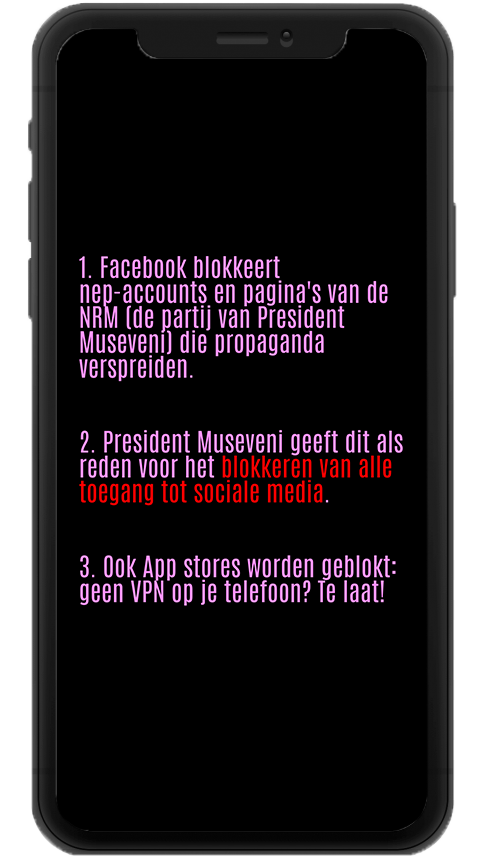
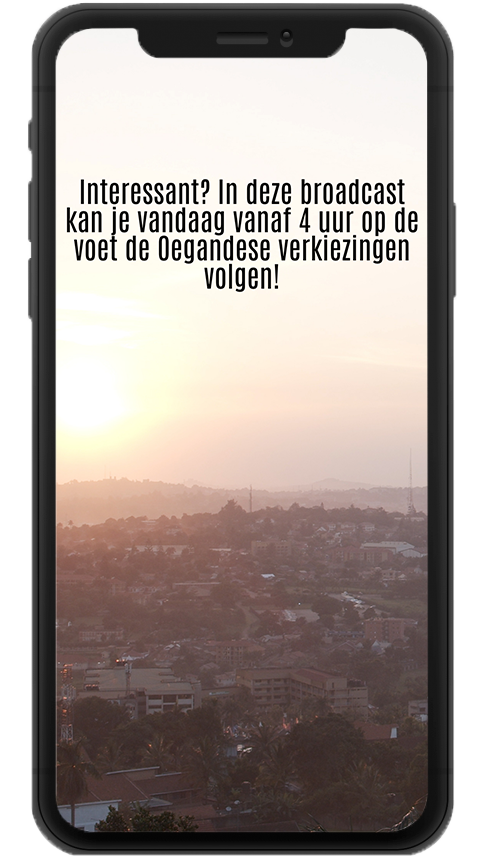
Elections in Uganda. An opportunity for us to report about president opponent Bobi Wine for ‘Human’ Instagram.